
Traversing the heart of the Nepalese Himalayas, the Annapurna Circuit Trek remains one of the world’s most iconic long-distance alpine journeys. Circling the towering Annapurna Massif, this trek transitions through subtropical river valleys, alpine pine forests, arid trans-Himalayan plateaus, and dramatic high-altitude mountain passes.
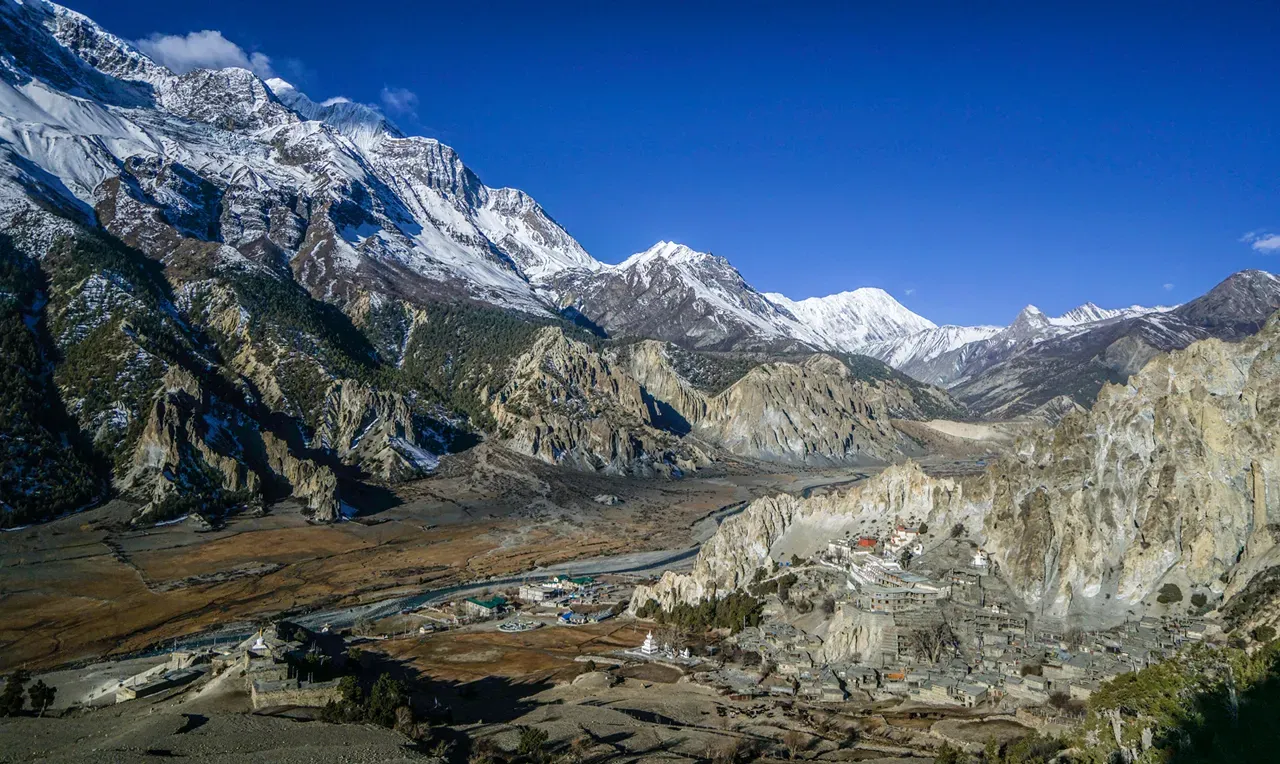
This comprehensive Annapurna Circuit Trek Package provides an all-inclusive, safety-focused, and expertly guided itinerary designed to take you across the legendary Thorong La Pass (5,416m / 17,769ft) while prioritizing proper acclimatization, cultural immersion, and seamless travel logistics.
Package Overview & Key Highlights
-
Duration: 14 Days / 13 Nights (Kathmandu to Kathmandu)
-
Trek Distance: Approx. 160 km – 190 km (depending on optional side routes)
-
Max Elevation: 5,416m / 17,769ft (Thorong La Pass)
-
Trek Difficulty: Moderate to Demanding (High Altitude)
-
Start / End Point: Besisahar (Start) / Pokhara or Nayapul (End)
-
Accommodation: Standard Hotels in Cities; Handpicked Traditional Teahouses on Trail
-
Permits Included: Annapurna Conservation Area Permit (ACAP) & TIMS Card
Major Highlights of the Route
-
Thorong La Pass Crossing: Stand at 5,416 meters above sea level surrounded by views of the Annapurna, Dhaulagiri, and Manaslu mountain ranges.
-
Climatic Diversity: Walk through lush tropical vegetation, dramatic pine forests, and stark Himalayan desert landscapes akin to the Tibetan Plateau.
-
Cultural Immersion: Discover traditional Gurung, Manangi, and Thakali villages, exploring centuries-old Buddhist monasteries, chortens, and prayer walls.
-
Muktinath Shrine: Visit one of the most sacred pilgrimage sites in Nepal, revered by both Hindus and Buddhists.
-
Natural Hot Springs: Unwind in the natural thermal waters of Tatopani after descending from the high pass.
Detailed 14-Day Itinerary
[Kathmandu] ➔ [Besisahar / Dharapani] ➔ [Chame] ➔ [Pisang] ➔ [Manang]
➔ [Acclimatization Day] ➔ [Yakharka] ➔ [Thorong Phedi]
➔ [Thorong La Pass] ➔ [Muktinath] ➔ [Jomsom] ➔ [Pokhara] ➔ [Kathmandu]
Day 1: Arrival in Kathmandu (1,400m)
Upon arrival at Tribhuvan International Airport (KTM), our representative will transfer you to your hotel in Thamel. In the evening, attend a pre-trek briefing, meet your licensed trekking guide, and conduct a final equipment check.
-
Meals: Welcome Dinner | Stay: 3-Star Hotel in Kathmandu
Day 2: Drive from Kathmandu to Besisahar & Trek to Dharapani (1,860m)
Take an early morning scenic drive along the Trishuli and Marshyangdi rivers to Besisahar, the gateway to the Annapurna region. From Besisahar, transition to a local 4WD jeep toward Dharapani, where the foot journey officially begins.
-
Drive Time: 6–7 Hours | Trek Time: 2 Hours | Stay: Teahouse in Dharapani
Day 3: Dharapani to Chame (2,670m)
Follow the Marshyangdi River through steep forest canyons, passing pine and fir forests alongside cascading waterfalls. As you approach Chame, the administrative center of the Manang District, views of Mount Lamjung and Annapurna II begin to open up.
-
Trek Time: 5–6 Hours | Distance: ~15.5 km | Stay: Teahouse in Chame
Day 4: Chame to Upper Pisang (3,300m)
Walk through a dense forest trail that opens up to the dramatic curve of Paungda Danda—a sheer 1,500-meter rock face. Crossing the river, the landscape grows noticeably drier as you enter the rain-shadow zone. Reach Upper Pisang for views of Annapurna II and IV.
-
Trek Time: 5–6 Hours | Distance: ~13.2 km | Stay: Teahouse in Upper Pisang
Day 5: Upper Pisang to Manang via Gyaru & Ngawal (3,540m)
Choose the high route via Gyaru and Ngawal for stunning panoramic views of the Annapurna Range. This route aids altitude acclimatization by taking you up to nearly 3,700m before dropping down to the valley floor in Manang.
-
Trek Time: 6–7 Hours | Distance: ~19.5 km | Stay: Teahouse in Manang
Day 6: Acclimatization Day in Manang (3,540m)
Acclimatization is essential for a safe high-altitude crossing. Spend the day taking a active acclimatization hike to Gangapurna Lake, Chongkor Viewpoint, or the Praken Gompa. Attend the daily high-altitude safety lecture run by the Himalayan Rescue Association (HRA) in Manang.
-
Activity: Acclimatization Hikes | Stay: Teahouse in Manang
Day 7: Manang to Yak Kharka (4,110m)
Leaving the main Marshyangdi valley, ascend gradually toward Yak Kharka. The terrain changes to alpine scrub and tundra, where blue sheep (Bharal) and Himalayan yaks graze along the mountain slopes.
-
Trek Time: 4 Hours | Distance: ~10.4 km | Stay: Teahouse in Yak Kharka
Day 8: Yak Kharka to Thorong Phedi / High Camp (4,450m / 4,880m)
Ascend toward the base of the pass. Cross a suspension bridge and traverse a scree slope to reach Thorong Phedi or High Camp. Turn in early to prepare for the early morning ascent over Thorong La.
-
Trek Time: 3–4 Hours | Distance: ~7.3 km | Stay: Teahouse in High Camp
Day 9: Thorong High Camp to Thorong La Pass (5,416m) to Muktinath (3,800m)
Start around 3:30–4:00 AM to cross Thorong La Pass before high winds pick up mid-morning. The steady climb over snow and glacial debris leads to the fluttering prayer flags of the pass. After taking in panoramic views of Annapurna and Dhaulagiri, begin a 1,600-meter descent to Muktinath.
-
Trek Time: 8–9 Hours | Distance: ~15.6 km | Stay: Teahouse in Muktinath
Day 10: Muktinath to Jomsom via Kagbeni (2,720m)
Visit the sacred Muktinath Temple in the morning before descending through the ancient wind-sculpted Mustang landscape to Kagbeni, the entry gate to Upper Mustang. Follow the windy Kali Gandaki riverbed down to Jomsom, famous for its Thakali culture and apple orchards.
-
Trek Time: 5–6 Hours | Distance: ~18 km | Stay: Teahouse in Jomsom
Day 11: Jomsom to Tatopani (1,190m) via Drive
Take a local vehicle down through the Kali Gandaki Gorge—the deepest gorge in the world—passing between the Dhaulagiri and Annapurna massifs to reach Tatopani. Spend the late afternoon soaking in the natural hot springs to soothe sore muscles.
-
Drive Time: 4–5 Hours | Stay: Teahouse in Tatopani
Day 12: Tatopani to Pokhara via Nayapul
Drive from Tatopani through lush lower valley terrain to Pokhara. Transfer to a lakeside hotel and spend the afternoon relaxing along the shores of Phewa Lake.
-
Drive Time: 5–6 Hours | Stay: 3-Star Hotel in Pokhara
Day 13: Drive from Pokhara to Kathmandu
Return to Kathmandu via tourist bus along the Prithvi Highway, tracking the Trishuli River. Enjoy a farewell dinner with live traditional Nepalese cultural performances in the evening.
-
Drive Time: 6–7 Hours | Stay: 3-Star Hotel in Kathmandu
Day 14: Final Departure
Enjoy free time for last-minute souvenir shopping in Thamel before receiving a private airport transfer for your flight home.
Essential Travel Information
Best Seasons to Trek
|
Season |
Months |
Trail Conditions |
Temperature Range (High Altitude) |
|
Autumn (Peak) |
Late Sept – Nov |
Crystal clear skies, stable dry weather, crisp air |
Daytime: 5°C to 12°C | Night: -5°C to -10°C |
|
Spring (Secondary) |
March – May |
Mild weather, blooming rhododendrons, clear mornings |
Daytime: 8°C to 15°C | Night: 0°C to -5°C |
Note: The monsoon months (June to August) bring rain, landslips, and obscured views, while winter (December to February) brings severe cold and potential snow closures at Thorong La Pass.
BEST TIME TO TREK
[Jan – Feb] ❄️ Winter Cold & Snow Closures
[Mar – May] 🌸 Spring Rhododendron Bloom (Ideal)
[Jun – Aug] 🌧️ Monsoon Heavy Rain & Landslides
[Sep – Nov] ☀️ Autumn Clear Views & Stable Skies (Peak)
[Dec] ❄️ Early Winter Cold Sets In
Difficulty & Fitness Requirements
The Annapurna Circuit is graded Moderate to Demanding. While technical climbing skills are not required, high cardiovascular endurance is necessary to handle multi-day walking (5–7 hours per day) at altitude. A training routine focused on cardio, leg strength, and stair climbing 8 to 12 weeks prior to departure is recommended.
Acclimatization & Altitude Safety
High Altitude Sickness (AMS) is a primary consideration when ascending above 3,000 meters. Our itinerary builds in a mandatory rest day at Manang (3,540m) and strictly limits daily elevation gains above this threshold.
Package Inclusions & Exclusions
What is Included:
-
Transfers: All private ground transport (Airport transfers, Kathmandu–Besisahar, Jomsom–Tatopani–Pokhara, Pokhara–Kathmandu).
-
Permits: Annapurna Conservation Area Permit (ACAP) and TIMS Card registration fees.
-
Accommodation: 3 nights in Kathmandu/Pokhara (breakfast included); 10 nights in mountain teahouses.
-
Meals: Full board meals on the trail (Breakfast, Lunch, Dinner).
-
Staff: Government-licensed, English-speaking trekking guide and porters (1 porter per 2 trekkers, carrying up to 18kg max).
-
Safety Gear: First aid kit, pulse oximeter for daily oxygen level checks, and emergency response coordination.
What is Excluded:
-
International airfare and Nepal entry visa fees.
-
Travel and high-altitude medical evacuation insurance (mandatory up to 6,000m).
-
Personal gear (hiking boots, down jacket, sleeping bag).
-
Personal expenses (hot showers, Wi-Fi charging fees, soft drinks/alcohol, tips for crew).
Frequently Asked Questions (FAQ)
1. How cold does it get on the Annapurna Circuit?
Temperatures vary widely across climate zones. Lower valleys can be warm ($20^circtext{C}$ to $25^circtext{C}$), but at High Camp and Thorong La Pass during autumn or spring, temperatures drop well below freezing, reaching $-10^circtext{C}$ to $-15^circtext{C}$ early in the morning. Proper layering is essential.
2. Do I need travel insurance for this trek?
Yes, medical and search/rescue insurance covering altitudes up to 6,000 meters is strictly mandatory. Ensure your policy covers helicopter evacuation, as roads do not reach the high pass sections.
3. What are teahouse accommodations like?
Teahouses are mountain lodges offering basic, comfortable lodging. Rooms generally feature twin beds with mattresses and blankets. Lower elevations often offer private attached bathrooms, while higher elevations feature shared facilities. Central dining areas are heated in the evenings.
4. Can I charge my electronics and access Wi-Fi on the trail?
Wi-Fi and solar/electricity charging points are available in most teahouses up to Manang for a small fee (2–5 USD). Signal availability decreases above 4,000 meters. Carrying a high-capacity power bank is highly recommended.
Book Your Himalayan Adventure
The Annapurna Circuit remains a bucket-list journey through dramatic, changing mountain landscapes. Contact our team today to reserve your spot on an upcoming fixed-departure trek or customize a private itinerary designed for your schedule.