
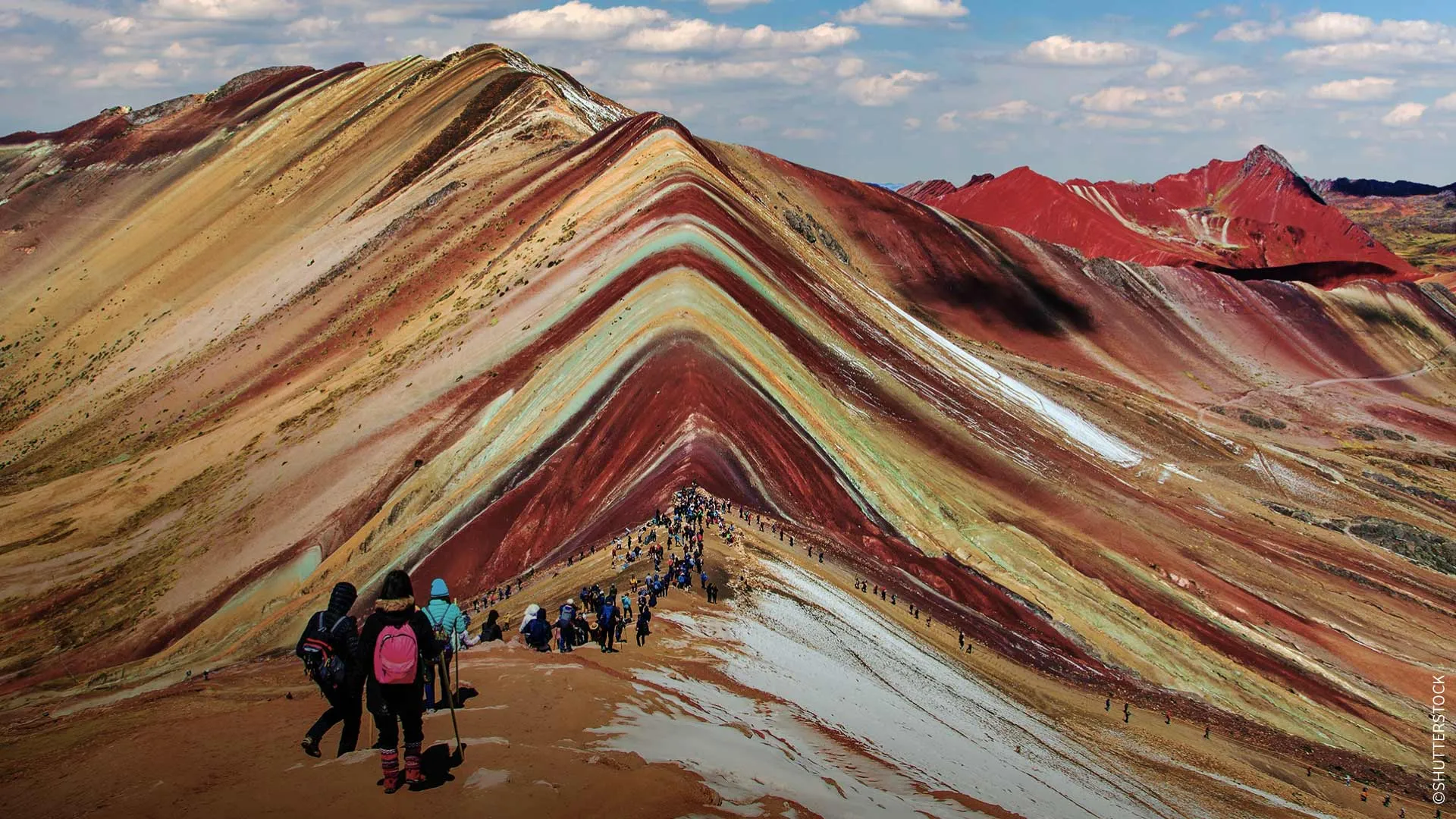
Rising to 5,200 meters (17,060 feet) in the Peruvian Andes, Vinicunca known worldwide as Rainbow Mountain has emerged as one of South America’s most Instagram-famous destinations. This geological marvel displays natural striations of crimson, gold, turquoise, and lavender across its slopes, creating landscapes so surreal they appear digitally manipulated. Until recently buried beneath glacial ice, climate change has exposed these mineral-rich sedimentary layers, revealing a natural masterpiece formed over millions of years. The trek to Rainbow Mountain represents both triumph and challenge, a grueling high-altitude journey through traditional Andean communities and dramatic mountain scenery, culminating in arrival at one of Earth’s most visually spectacular geological formations. For adventurers seeking experiences that test physical limits while delivering unparalleled natural beauty, Rainbow Mountain offers transformative encounters where struggle yields to wonder.
The Science Behind the Stripes
Rainbow Mountain’s extraordinary coloration results from complex geological processes spanning over 65 million years. The vibrant layers represent different mineral compositions deposited during various climatic periods when this region lay beneath ancient seas, tropical environments, or experienced volcanic activity. Each color band tells a specific geological story written in stone and mineral.
The red and pink striations derive from iron oxide (rust) deposited when the region experienced oxidizing conditions. These layers formed during periods when iron-rich sediments weathered in oxygen-present environments, creating the distinctive crimson hues dominating much of the mountain’s visible surface. The intensity varies based on iron concentration and oxidation completeness, ranging from pale pink to deep burgundy.
Yellow and gold layers contain sulfur compounds mixed with iron minerals, creating mustard and ochre tones that contrast dramatically with adjacent colors. These deposits formed under different chemical conditions, possibly involving volcanic sulfur emissions or sulfur-rich sedimentary sources. The brightness of yellow sections depends on sulfur concentration and the presence of other minerals modifying the base coloration.
Turquoise and green striations represent copper sulfate deposits (similar to malachite and chrysocolla minerals) combined with iron and sulfur compounds. These stunning blue-green bands formed when copper-bearing solutions percolated through sedimentary layers, precipitating distinctive minerals that oxidized into the brilliant colors visible today. The turquoise appears most vivid where copper concentrations reach highest levels.
Purple and lavender layers result from manganese and magnesium carbonate deposits mixed with red clay, creating unique mauve tones unlike anything found in surrounding landscapes. White streaks represent quartzite and sandstone with minimal mineral contamination, while darker bands indicate carbon-rich sediments or volcanic ash layers.
The mountain’s dramatic appearance emerged only recently in geological terms. Until approximately 2013, permanent ice and snow covered Vinicunca’s summit, concealing the colorful layers beneath white blankets. As climate change accelerated glacial retreat, the ice melted away, exposing the rainbow striations and transforming an unremarkable snow-covered peak into a global sensation. This revelation simultaneously created a spectacular tourist attraction while providing visible evidence of climate change’s dramatic regional impacts.
The Trek: Altitude and Endurance
The journey to Rainbow Mountain typically begins in Cusco with pre-dawn departures around 3:00-4:00 AM, allowing vehicles to reach the trailhead before crowds accumulate. The three-hour drive traverses the Sacred Valley before climbing into increasingly remote Andean highlands where paved roads yield to rough dirt tracks. The route passes through traditional communities including Pitumarca and Checacupe, where Quechua families maintain agricultural and pastoral lifestyles largely unchanged for centuries.
The trailhead at Quesyuno (4,620 meters) already sits higher than any mountain in the continental United States, immediately presenting altitude challenges for most visitors. From this starting point, the trail ascends approximately 580 vertical meters across 5 kilometers of increasingly steep terrain. The distance seems manageable in normal conditions; this would constitute a moderate two-hour hike. However, at extreme altitude where oxygen levels drop to roughly 50% of sea-level concentrations, this becomes a genuinely challenging trek testing physical and mental resolve.
The trail begins following a gravel road through a high-altitude valley where herds of alpacas graze across grasslands. These domesticated camelids, raised for fiber and meat, thrive at elevations where most other livestock cannot survive. The valley provides a deceptively gentle introduction to the trek, allowing gradual warm-up before steeper sections commence.
As elevation increases, the path steepens considerably. Switchbacks carved into mountainsides by growing tourist traffic replace the valley road, climbing relentlessly toward distant ridges. The thin air makes every step laborious hearts pound, lungs strain to extract sufficient oxygen, and legs burn with accumulating lactic acid. Most trekkers adopt a slow, deliberate pace: step, breathe, step, breathe, frequent rest stops bending over trekking poles while waiting for heart rates to stabilize.
The landscape transforms with elevation. Vegetation becomes increasingly sparse as hardy grasses give way to bare rock and scree. The views expand dramatically as snow-capped peaks emerge on horizons, while the valley drops away below revealing the route’s impressive elevation gain. Weather can shift rapidly, with brilliant sunshine yielding to snow squalls within minutes, then clearing again just as quickly.
The final approach crosses a high pass where Rainbow Mountain suddenly appears a massive slope displaying impossible striations of red, yellow, turquoise, green, and purple. The visual impact arrives like a physical blow, exhaustion temporarily forgotten in overwhelming wonder. Most visitors spend 20-40 minutes at the viewing area, photographing from multiple angles and simply absorbing the surreal beauty of this natural phenomenon.
The most adventurous can climb an additional 100 meters to the actual summit or ascend the adjacent Red Valley viewpoint for alternative perspectives. These extensions require significant additional effort at altitude where movement feels extraordinarily difficult, but deliver enhanced photography opportunities and the satisfaction of reaching the true peak.
Alternative Routes and Extended Treks
As Rainbow Mountain’s popularity exploded daily visitors sometimes exceeding 1,000 during peak season alternative approaches emerged offering different experiences and crowd avoidance. The Ausangate Trek, a challenging multi-day circuit around the sacred Ausangate massif (6,384 meters), passes near Rainbow Mountain, allowing incorporation as a highlight within a broader high-altitude adventure. This approach suits experienced trekkers seeking wilderness immersion beyond day-trip tourism.
The Red Valley route provides an alternative viewpoint with different geological formations. This area displays predominantly crimson and burgundy mineral deposits creating Martian landscapes of surreal beauty. Combined Rainbow Mountain and Red Valley tours maximize visual diversity while requiring additional physical exertion navigating between viewpoints.
Horse riding services operate from the trailhead, transporting those unable or unwilling to hike the entire distance. While reducing physical challenge, this option allows altitude-sensitive or fitness-limited visitors to experience Rainbow Mountain’s beauty. However, animal welfare concerns surround these services, as horses work at extreme altitudes carrying heavy loads in conditions that stress even well-adapted animals.
Physical Preparation and Altitude Strategies
Successful Rainbow Mountain treks demand appropriate preparation and realistic self-assessment. The extreme altitude affects everyone regardless of fitness level Olympic athletes struggle equally with sedentary individuals when insufficiently acclimatized. However, cardiovascular conditioning and leg strength significantly improve comfort during the actual hiking portions.
Pre-trip training should emphasize cardio endurance and hill climbing. Stair climbing, hiking with elevation gain, cycling, and running build cardiovascular capacity and leg strength essential for sustained uphill effort. Training with loaded backpacks simulates trek conditions, though nothing fully replicates altitude’s effects except actual high-elevation exposure.
Acclimatization proves absolutely critical for tolerable experiences. Visitors should spend a minimum 2-3 days in Cusco (3,400 meters) before attempting Rainbow Mountain, ideally incorporating shorter high-altitude excursions like Sacred Valley tours or moderate hikes. Those arriving directly from sea level to Cusco then immediately visiting Rainbow Mountain often suffer acute mountain sickness (AMS) that transforms potentially magnificent experiences into miserable ordeals featuring severe headaches, nausea, vomiting, and dangerous symptoms requiring immediate descent.
Coca leaves, chewed or consumed as tea, represent traditional Andean altitude remedies. The mild stimulant and alkaloid effects may provide symptomatic relief, though scientific evidence remains inconclusive. Pharmaceutical options include acetazolamide (Diamox), which accelerates acclimatization when taken preventatively before altitude exposure. However, medical consultation should precede any medication use.
During the trek itself, pacing determines success. The “pole-pole” (slowly-slowly) philosophy from Kilimanjaro applies equally here: deliberate, sustainable pace maintaining conversation ability prevents overexertion that depletes energy reserves. Regular hydration combats dehydration that exacerbates altitude symptoms, while high-energy snacks provide fuel for sustained effort.
Essential Gear and Packing Considerations
Weather at 5,200 meters proves unpredictable and potentially severe, requiring preparation for conditions ranging from intense sun to snowstorms. Layered clothing systems allow adaptation as conditions change base layers wicking moisture from skin, insulating mid-layers providing warmth, and waterproof shells protecting against wind and precipitation.
Quality hiking boots with ankle support and aggressive tread prevent slips on loose scree while providing stability during steep sections. Broken-in footwear prevents blisters that transform descents into torture. Trekking poles dramatically reduce knee strain during downhill portions while providing stability and rhythm during climbs.
Sun protection becomes critical at extreme altitude where UV radiation intensifies dramatically. High-SPF sunscreen, polarized sunglasses, and wide-brimmed hats or balaclavas prevent burns occurring surprisingly quickly in a thin atmosphere. Snow blindness painful UV damage to corneas can result from inadequate eye protection, particularly when snow cover increases UV reflection.
Warm accessories including gloves, warm hats, and neck gaiters protect extremities where frostbite risk exists during cold conditions. Temperatures at the summit can drop well below freezing even during summer months, while wind chill amplifies cold effects significantly.
Small backpacks should contain hydration systems (2-3 liters minimum), high-energy snacks, basic first aid, altitude medication if prescribed, personal medications, and camera equipment. Bringing offerings for apachetas sacred stone cairns where tradition encourages leaving stones or coca leaves requesting mountain blessings demonstrates cultural respect.
Cultural Context and Community Impact
Rainbow Mountain lies within traditional territories of Quechua communities who have inhabited these highlands for centuries. Tourism’s rapid growth brought economic opportunities but also challenges to traditional lifestyles. Local families now derive income from guide services, horse rentals, food vendors, and artisan sales revenue streams providing alternatives to subsistence agriculture and alpaca herding.
However, this transformation raises complex questions about cultural preservation, environmental impacts, and equitable benefit distribution. The influx of thousands of visitors alters community dynamics, while trail erosion and litter degrade the pristine environments that attract tourism. Some families embrace these changes as economic progress, while others lament erosion of traditional practices and values.
Responsible visitors contribute positively by choosing tour operators partnering fairly with local communities, purchasing directly from artisan vendors, respecting sacred sites and cultural practices, and adhering to leave-no-trace principles. Understanding that these mountains represent sacred Apus (mountain spirits) in Andean cosmology not merely scenic backdrops encourages reverent engagement rather than extractive tourism.
Photography Strategies for Capturing the Colors
Rainbow Mountain’s vivid striations create extraordinary photography opportunities, though capturing the colors accurately presents technical challenges. The intense hues photograph beautifully but require understanding of exposure, white balance, and composition for optimal results.
Polarizing filters enhance color saturation and reduce glare, making the mineral layers appear even more vivid. However, excessive polarization creates unnatural effects, requiring careful rotation to balance enhancement against realism. Clear UV filters protect lenses from blowing dust and occasional precipitation while reducing atmospheric haze that can mute distant colors.
The best light typically occurs during mid-morning (9:00-11:00 AM) when most trekkers reach the summit. The sun illuminates the mountain directly while remaining low enough to create dimensional shadows defining the terrain’s topography. Afternoon light can work but often brings clouds obscuring peaks and flattening lighting. Overcast conditions eliminate harsh shadows but can mute the vibrant colors that make Rainbow Mountain spectacular.
Wide-angle lenses capture the mountain within its broader context, showing the relationship between colorful slopes and surrounding peaks. Telephoto lenses isolate details specific color bands, texture variations, or human figures providing scale. Drone photography reveals perspectives impossible from ground level, though regulations governing drone use in Peru require verification and operators should respect other visitors.
Environmental Concerns and Sustainable Futures
Rainbow Mountain’s exposure through glacial retreat simultaneously created a tourist attraction and provided visible climate change evidence. The Quelccaya Ice Cap, South America’s largest tropical ice sheet located nearby, has lost over 30% of its area since 1976, with retreat rates accelerating annually. These glaciers provide essential water resources for millions of people, making their disappearance an environmental and humanitarian crisis.
Tourism impacts compound climate concerns. Daily visitor numbers during peak season create trail erosion, litter accumulation despite cleanup efforts, and disturbance to fragile high-altitude ecosystems where vegetation recovery occurs extremely slowly. Horse and vehicle traffic contributes to soil compaction and air pollution in previously pristine areas.
Conservation efforts must balance economic benefits against environmental protection. Limiting daily visitors, enforcing designated trails, implementing rigorous waste management, and investing tourism revenue into environmental restoration represent essential strategies. Visitors play crucial roles through responsible behavior, packing out all trash, staying on trails, supporting ethical operators, and advocating for sustainable tourism policies.
Conclusion
Rainbow Mountain represents one of nature’s most spectacular geological artworks, millions of years of mineral deposition exposed through climate change to reveal striations of impossible beauty. The trek to Vinicunca tests physical limits at extreme altitude, demanding proper preparation, acclimatization, and determination. Yet those who persevere discover landscapes so surreal they challenge belief, where reds, yellows, turquoise, and purples stripe mountainsides in patterns defying expectation. Beyond visual splendor, the journey provides insights into Andean cultures, climate change impacts, and personal capabilities when comfort zones are abandoned for challenging adventures. As tourism grows and glaciers retreat, visiting Rainbow Mountain carries both privilege and responsibility to engage respectfully, tread lightly, and support conservation ensuring this extraordinary natural wonder endures for future generations to witness and protect.
Frequently Asked Questions
Q: How difficult is the Rainbow Mountain trek? A: The trek is moderately difficult primarily due to extreme altitude (5,200m summit) rather than technical challenges. The 5km trail with 580m elevation gain would be easy at sea level but becomes genuinely challenging where oxygen is roughly 50% of normal. Proper acclimatization and realistic fitness assessment determine success.
Q: How long does the Rainbow Mountain trek take? A: The round-trip hike typically takes 3-4 hours total (1.5-2 hours ascending, 1-1.5 hours descending) plus 20-40 minutes at the summit. Total tour duration from Cusco averages 12-14 hours including 6 hours driving and breaks for meals.
Q: What is the best time to visit Rainbow Mountain? A: Dry season (May-September) offers most reliable weather with clear skies and minimal precipitation, though coldest temperatures and highest crowds. Shoulder months (April, October) balance decent weather against moderate tourist numbers. Wet season (November-March) brings afternoon rains and occasional snow but fewer visitors and potentially dramatic skies.
Q: Do I need special permits to visit Rainbow Mountain? A: No advance permits are required. Entrance fees (approximately 25-30 soles) are collected at checkpoints near the trailhead. However, going with reputable tour operators ensures proper permissions, transportation, and guide services enhancing safety and experience quality.
Q: Can I visit Rainbow Mountain without a tour? A: Independent visits are possible but challenging. Public transportation doesn’t reach the remote trailhead, requiring private vehicle rental and navigation on difficult roads. Tour operators provide transportation, guides, meals, and emergency support, making guided tours the practical choice for most visitors despite independent travel being theoretically feasible.