
Key Takeaways
-
The best powertrain depends on your real driving habits, charging access, budget, and travel plans.
-
Gas vehicles prioritize quick refueling and broad flexibility.
-
Traditional hybrids improve efficiency without adding a charging routine.
-
Plug-in hybrids are most worthwhile when they are charged regularly.
-
Electric vehicles can be an excellent fit for drivers with dependable home or workplace charging.
-
Purchase price is only part of the ownership equation.
Choosing a vehicle in 2026 is about more than deciding whether you want the newest technology. The right answer depends on how far you drive, where you park, who rides with you, and whether stopping to charge would fit naturally into your week. When comparing options and availability, learn more about vehicles that match your needs rather than starting with a powertrain label alone.
A gas vehicle, hybrid, plug-in hybrid, or EV can all be smart choices for different households. The goal is not to buy the most advanced option. It is to choose a vehicle that makes daily life easier while keeping long-term costs and compromises realistic.
Start With Your Daily Routine
Before looking at horsepower, range, or monthly payments, track your driving for a typical week. Include commuting, school drop-offs, errands, weekend activities, traffic delays, parking conditions, and long trips. Also consider whether you have a garage, driveway, assigned parking space, workplace charger, or only public charging nearby.
For example, a driver with a 20-mile daily commute, dependable overnight charging, and several long road trips each year may find a plug-in hybrid especially practical. A traditional hybrid could be the better fit if charging is uncertain, while a full EV may work well if road-trip charging stops are acceptable.
Understand the Basic Differences
-
Gas: A gasoline engine provides all propulsion and refuels at ordinary fuel stations.
-
Hybrid: A gasoline engine works with an electric motor and battery. It does not need to be plugged in.
-
Plug-in hybrid: A larger battery allows limited electric driving after charging, with gasoline power available for longer travel.
-
Electric: A battery and electric motor replace the gasoline engine entirely.
Because model specifications vary widely, use the fuel-economy comparison tools to check the ratings and estimated energy use for the exact vehicles you are considering.
When Gas Makes Sense
Gasoline power remains a sensible choice for drivers who need quick refueling, frequent long-distance trips, or regular towing. It can also simplify ownership for apartment residents and others who lack reliable access to charging. A gas vehicle may not have the lowest daily operating cost, but convenience has value when your schedule leaves little room for route planning or charging stops.
When To Choose a Traditional Hybrid
A traditional hybrid is a strong middle-ground option. It can reduce fuel use, particularly in stop-and-go traffic where regenerative braking recovers some energy, without changing the familiar routine of filling up at a gas station. Long trips remain straightforward, with no charger to install or a charging schedule to manage.
Compare the higher purchase price against expected fuel savings, warranty coverage, cargo space, and insurance costs. For many drivers who want efficiency without lifestyle changes, that trade-off is easy to understand and live with.
Who Benefits From a Plug-In Hybrid?
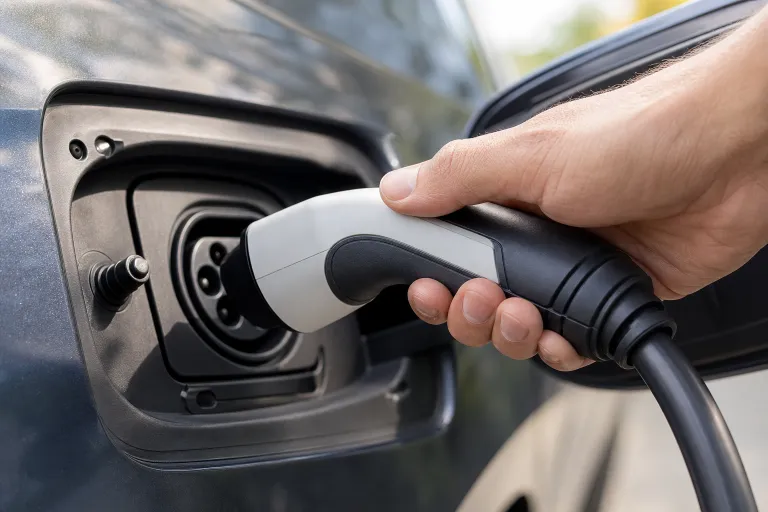
A plug-in hybrid works best when it is actually plugged in. It can handle short trips on electricity while retaining gasoline as a backup for vacations, family visits, or unexpected highway travel. The U.S. Department of Energy explains that plug-in hybrid vehicles use both batteries and another fuel source, which is why they can bridge the gap between conventional hybrids and EVs.
The key question is simple: will charging become routine? If the answer is no, a traditional hybrid may deliver better value with less complexity. If the answer is yes, a plug-in hybrid can reduce gasoline use without requiring every trip to fit within the electric range.
When an Electric Vehicle Fits
An EV is often easiest to own when home or workplace charging is dependable, and most travel falls comfortably within the vehicle’s practical range. Drivers may appreciate quiet operation, smooth acceleration, and fewer routine maintenance items. However, cold weather, high speeds, heavy cargo, towing, and steep terrain can affect range, so plan around real conditions instead of an idealized estimate.
Public charging can support EV ownership, but it is not equally convenient in every neighborhood or travel corridor. Consider charger reliability, wait times, road-trip routes, and whether your parking situation makes overnight charging realistic.
Compare Full Ownership Costs
A low monthly payment does not automatically mean a lower-cost vehicle. Compare the expected cost over the time you plan to own it, including:
-
Purchase price, down payment, financing rate, and term length
-
Gasoline or electricity expenses
-
Insurance, registration, taxes, and local fees
-
Scheduled maintenance, tires, and warranty coverage
-
Home-charging equipment and installation, if needed
-
Expected resale value and your likely ownership period
Track your current fuel spending for 30 days before shopping. That personal number is more useful than assuming national averages will match your routes, driving style, and local utility rates.
Match Powertrain and Vehicle Size
Powertrain is the only one decision. A compact car may be ideal for commuting and tight parking, while a small SUV can offer a higher seating position with manageable operating costs. Midsize and three-row SUVs offer more passenger and cargo space, but they can require more energy and cost more to insure, equip, and maintain.
Measure your garage, parking space, child-seat positions, cargo opening, and regularly carried gear. A highly efficient vehicle that cannot handle your real passenger or cargo needs is still the wrong fit.
Use a Practical Test-Drive Checklist
-
Bring a child seat, stroller, work bag, or sports equipment you use often.
-
Check visibility, seat comfort, rear-seat access, and cargo loading height.
-
Try parking, turning, braking, and merging at normal road speeds.
-
Use the infotainment system without assistance from dealership staff.
-
Ask specific questions about maintenance, battery coverage, charging, and roadside support.
Avoid Common Buying Mistakes
Do not choose solely on an advertised payment, and do not assume an EV or plug-in hybrid is automatically cheaper to own. Confirm charging access before buying an EV, and be honest about whether you will consistently charge a plug-in hybrid. Consider weather, traffic, insurance, tire costs, regular passengers, cargo needs, and towing frequency.
The best final choice is straightforward: choose gas for maximum refueling flexibility, a hybrid for efficiency without plugging in, a plug-in hybrid for regular short electric trips with gasoline backup, or an EV when charging fits your routine and most driving is predictable. The right vehicle is the one that supports your life every day, not just the one that looks best on a comparison list.