
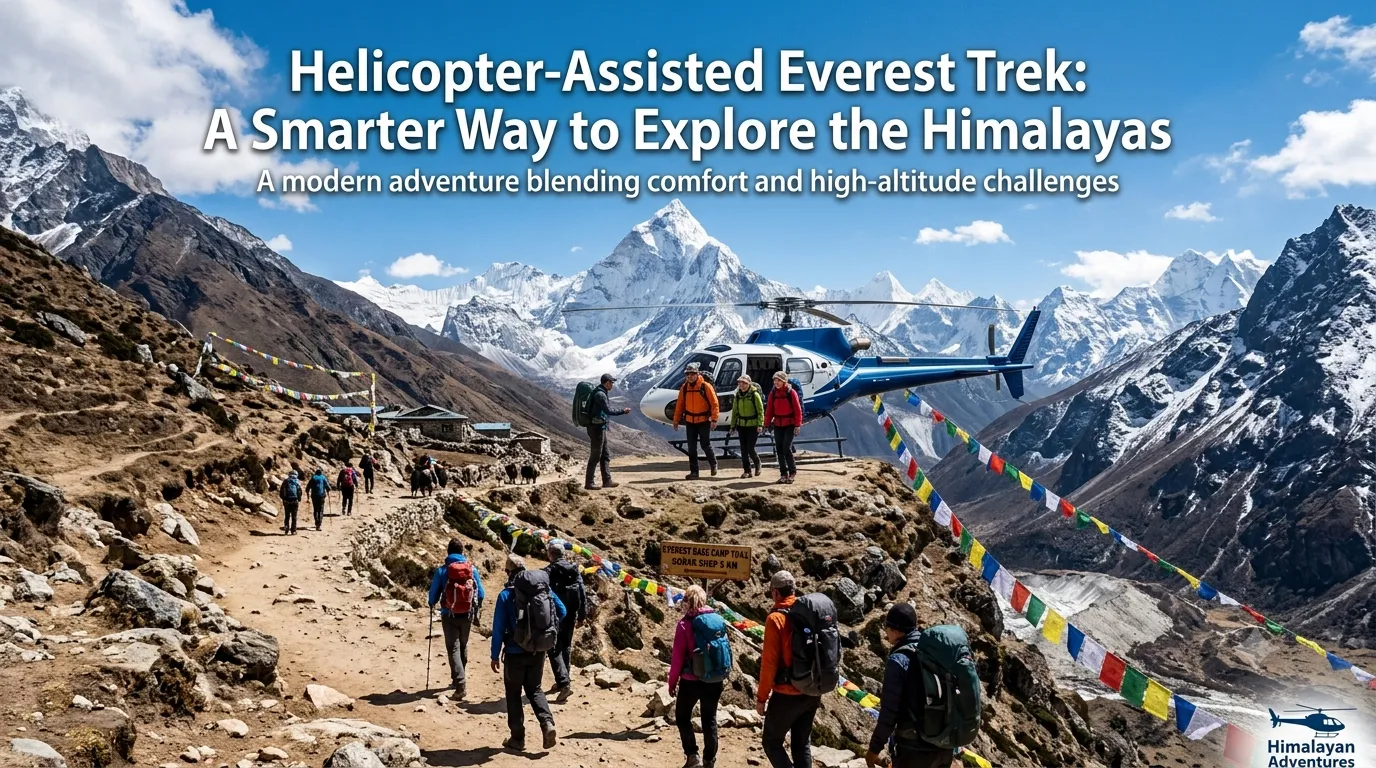
The helicopter-assisted Everest trek is an exciting option for travelers who want to experience the legendary Everest region while enjoying greater flexibility, comfort, and time efficiency. This unique trekking style combines traditional walking through Himalayan landscapes with the convenience of helicopter transportation. It allows adventurers to explore remote mountain trails, experience Sherpa culture, and admire spectacular views without committing to a long return journey on foot.
For many travelers, trekking near Mount Everest is a lifelong dream. However, limited vacation time, physical concerns, or unpredictable mountain transportation can make a conventional itinerary challenging. A helicopter-assisted journey offers a practical alternative while preserving the most meaningful parts of the trekking experience.
What Is a Helicopter-Assisted Everest Trek?
A helicopter-assisted Everest trek combines hiking with one or more helicopter flights. Depending on the itinerary, travelers may use a helicopter to reach a starting point, return after completing the main trek, or connect between remote locations.
One of the most popular arrangements involves trekking toward Everest Base Camp and returning by helicopter from a suitable location in the Khumbu region. This approach allows trekkers to complete the demanding and rewarding journey toward the higher Himalayas while avoiding several days of retracing the same route.
Another option is to use a helicopter for access when regular flights face disruptions or when travelers prefer a private and flexible transfer. The exact structure depends on weather conditions, group size, budget, acclimatization requirements, and personal travel goals.
Why Choose a Helicopter-Assisted Everest Trek?
The biggest advantage of a helicopter-assisted Everest trek is time efficiency. A standard Everest journey often requires around two weeks or more, depending on the route and acclimatization schedule. Helicopter support can shorten certain sections, particularly the return journey.
Comfort is another important benefit. After several days of walking at high altitude, trekkers may feel physically exhausted. A helicopter return can reduce the strain of descending through the same valleys and villages. This can be especially appealing to travelers who want a challenging adventure but prefer a more comfortable conclusion.
The experience also provides a remarkable aerial perspective. Flying above the Himalayan landscape reveals deep valleys, glacial terrain, isolated settlements, and dramatic mountain formations from a completely different angle.
The Trekking Experience in the Everest Region
Despite the use of helicopter transportation, the journey remains a genuine trekking adventure. Travelers can walk through some of the most famous locations in the Everest region, including Namche Bazaar, Tengboche, Dingboche, Lobuche, and Gorak Shep, depending on the selected itinerary.
The trail introduces visitors to suspension bridges, prayer flags, monasteries, stone villages, forests, and high-altitude landscapes. As elevation increases, the environment gradually changes from green valleys to rugged alpine terrain.
A major highlight is the opportunity to observe some of the world’s most impressive peaks. Trekkers may enjoy views of Mount Everest, Lhotse, Nuptse, Ama Dablam, Thamserku, and other Himalayan giants. The combination of walking and aerial travel creates a diverse mountain experience that few conventional holidays can match.
Acclimatization Is Still Essential
A helicopter does not remove the need for proper acclimatization. This is one of the most important considerations when planning a helicopter-assisted journey in the Everest region.
Traveling too quickly to high altitude can increase the risk of altitude-related illness. Therefore, a responsible itinerary should include gradual elevation gain, appropriate rest days, adequate hydration, and careful monitoring of physical symptoms.
Trekkers should never assume that helicopter access makes rapid ascent safe. Even physically fit travelers can experience altitude problems. A well-designed schedule is essential for both safety and enjoyment.
Best Time for the Journey
The most popular seasons for a helicopter-assisted Everest trek are generally spring and autumn. Spring, particularly from March to May, often provides favorable trekking conditions, colorful vegetation at lower elevations, and excellent mountain scenery.
Autumn, especially from late September through November, is also highly popular because of clearer skies and stable trekking conditions. The post-monsoon atmosphere can provide outstanding visibility across the Himalayas.
Winter trekking is possible for experienced and well-prepared travelers, but temperatures can be extremely cold at higher elevations. The monsoon season brings clouds, rain at lower elevations, and possible flight disruptions. Since helicopter operations depend heavily on visibility and weather, flexibility is important throughout the year.
Who Is This Trek Best For?
A helicopter-assisted journey is suitable for several types of travelers. It is particularly attractive to people with limited vacation time who still want an immersive Himalayan trekking experience.
It can also appeal to luxury travelers who prefer additional convenience, private arrangements, and flexible logistics. Photographers may appreciate the opportunity to see the mountains from both ground level and the air. Couples, small private groups, and families with suitable trekking experience may also consider customized itineraries.
However, travelers should still prepare physically. Helicopter support does not eliminate long walking days, steep terrain, cold temperatures, or high-altitude conditions.
Cost of a Helicopter-Assisted Everest Trek
The cost varies considerably according to the itinerary, season, helicopter sector, private or shared flight arrangements, accommodation standard, guide services, permits, and group size.
A private helicopter charter is generally more expensive than a shared flight. Similarly, premium lodges and customized services can increase the total package price. Travelers should carefully review what is included, such as airport transfers, trekking permits, meals, accommodation, guides, porters, domestic transportation, and helicopter charges.
Choosing a reliable trekking company is important because mountain aviation requires careful coordination and realistic contingency planning.
Essential Preparation Tips
Good preparation can make the journey safer and more enjoyable. Trekkers should build cardiovascular endurance before departure and practice walking on hills or stairs. Comfortable trekking boots, layered clothing, a warm down jacket, gloves, sun protection, and a quality sleeping bag are commonly recommended.
Travel insurance is another major consideration. Travelers should check whether their policy covers high-altitude trekking and emergency helicopter evacuation at the maximum elevation included in the itinerary.
It is also wise to keep extra time in the travel schedule. Himalayan weather can change rapidly, and helicopter flights may be delayed, rerouted, or canceled when conditions are unsuitable.
Luxury Everest Base Camp Journey: Experience the Himalayas in Comfort and Style
A luxury Everest Base Camp journey offers an extraordinary way to explore the world-famous Everest region while enjoying enhanced comfort, personalized services, and carefully planned travel arrangements. For many travelers, reaching the base of the world’s highest mountain is a lifelong dream. However, this adventure does not always have to mean sacrificing comfort at every stage of the trip.
With premium accommodations, experienced guides, scenic helicopter options, quality meals, and personalized support, a luxury journey to Everest Base Camp combines Himalayan adventure with a higher standard of service. It is an excellent choice for travelers who want to experience the beauty and challenge of the Everest region while making the journey as comfortable, organized, and memorable as possible.
What Is a Luxury Everest Base Camp Journey?
A luxury Everest Base Camp journey follows the legendary trekking route through the Khumbu region but adds premium services that improve the overall travel experience. The journey usually begins in Kathmandu, where travelers may stay in a high-quality hotel before flying toward Lukla, the traditional gateway to the Everest region.
From Lukla, the route passes through beautiful Sherpa settlements, forests, suspension bridges, monasteries, and high-altitude landscapes. Important stops often include Phakding, Namche Bazaar, Tengboche, Dingboche, Lobuche, and Gorak Shep before reaching Everest Base Camp.
What makes the journey luxurious is the attention given to accommodation, logistics, meals, guiding services, flexibility, and personal care. In lower-altitude locations where premium lodges are available, travelers can enjoy better rooms, improved dining facilities, warm hospitality, and additional amenities.
Premium Accommodation Along the Route
One of the main advantages of choosing a luxury journey is access to some of the best available accommodation in the Everest region. Traditional trekking often involves basic teahouses with simple rooms and shared facilities. A luxury itinerary, however, prioritizes higher-standard lodges whenever possible.
In places such as Lukla, Phakding, and Namche Bazaar, travelers may find comfortable lodges offering private rooms, attached bathrooms, heated dining spaces, better bedding, and carefully prepared meals. These features can make a significant difference after a long day of walking.
It is important to understand that luxury in the high Himalayas is different from luxury in major cities. As the trail climbs toward remote settlements such as Lobuche and Gorak Shep, accommodation becomes more basic due to altitude, weather, and transportation limitations. A well-planned luxury itinerary still selects the best available options in these locations.
Personalized Guiding and Professional Support
A successful luxury Everest Base Camp journey depends heavily on professional support. Experienced trekking guides help manage the route, monitor altitude-related concerns, coordinate accommodation, and adjust the pace according to individual needs.
Private or small-group travel is especially attractive for those who value flexibility. Instead of following a large group on a rigid schedule, travelers can enjoy a more personalized experience. Guides can provide information about Sherpa culture, Buddhist traditions, mountain geography, local communities, and the history of Himalayan exploration.
Porter services may also be included, allowing travelers to walk with a lighter daypack. This reduces physical strain and makes it easier to appreciate the scenery along the route.
A Scenic Route Through the Everest Region
The journey to Everest Base Camp is famous for its dramatic landscapes. After arriving in Lukla, the trail follows river valleys and crosses suspension bridges before climbing toward Namche Bazaar. This vibrant mountain town is an important center of the Khumbu region and a popular place for acclimatization.
From Namche, trekkers continue toward Tengboche, known for its monastery and impressive mountain surroundings. The route then climbs through increasingly open alpine landscapes toward Dingboche and Lobuche.
Throughout the journey, travelers may enjoy views of magnificent Himalayan peaks, including Everest, Lhotse, Nuptse, Ama Dablam, and Thamserku. The scenery changes constantly as green valleys give way to rocky terrain, glaciers, and high-altitude wilderness.
Reaching Everest Base Camp
The arrival at Everest Base Camp is the emotional highlight of the journey. Located at an altitude of approximately 5,364 meters, the base camp offers a close connection to the legendary world of Himalayan mountaineering.
Trekkers walk through rugged glacial terrain to reach the famous destination. During the main climbing season, the area may be filled with expedition activity, creating an exciting atmosphere. At other times of the year, the surroundings can feel quieter and more remote.
Many itineraries also include an early morning hike to Kala Patthar. This famous viewpoint is widely appreciated for its panoramic mountain scenery and impressive views toward Everest and surrounding peaks.
Helicopter Options for Added Comfort
A major feature of many luxury itineraries is the possibility of a helicopter return. Instead of retracing the entire trekking route back toward Lukla, travelers may choose to fly from a suitable point in the Everest region, depending on weather and operational conditions.
A helicopter option can save time and reduce the physical demands of the return journey. It also provides a spectacular aerial perspective of Himalayan valleys, villages, glaciers, and mountain landscapes.
Some premium journeys may also use helicopter transfers in other parts of the itinerary. However, all flights in the Everest region remain dependent on weather, visibility, aviation regulations, and safety considerations.
Best Time for a Luxury Everest Base Camp Journey
Spring and autumn are generally considered the most popular seasons for an Everest Base Camp adventure. Spring, particularly from March to May, often offers pleasant trekking conditions and active expedition energy. Autumn, especially from late September to November, is known for clearer skies and excellent mountain views.
Winter can provide quieter trails and beautiful scenery, but temperatures are significantly colder. The summer monsoon period usually brings more clouds, rain at lower elevations, and possible travel disruptions.
The best season depends on personal preferences, availability, tolerance for cold, and expectations regarding trail conditions.
Why Choose a Luxury Journey?
A luxury Everest Base Camp journey is ideal for travelers who want adventure without unnecessary logistical stress. Premium planning can provide better accommodation, private guiding, porter support, flexible pacing, quality meals, and carefully coordinated transportation.
This style of travel is particularly suitable for couples, families with appropriate trekking experience, private groups, older adventurers in good physical condition, and travelers with limited vacation time. It also appeals to those celebrating a special milestone or seeking a more exclusive Himalayan experience.
Final Thoughts
A luxury Everest Base Camp journey combines one of the world’s greatest trekking adventures with thoughtful comfort and personalized service. From the lively streets of Namche Bazaar to the peaceful monasteries, dramatic glaciers, and towering Himalayan peaks, every stage offers something remarkable.
While the high-altitude environment remains challenging, premium planning can make the overall experience smoother and more enjoyable. With professional guides, carefully selected lodges, personalized support, and optional helicopter services, travelers can focus more fully on the landscapes and cultural experiences around them.